
PLUCK/ Case Study 03
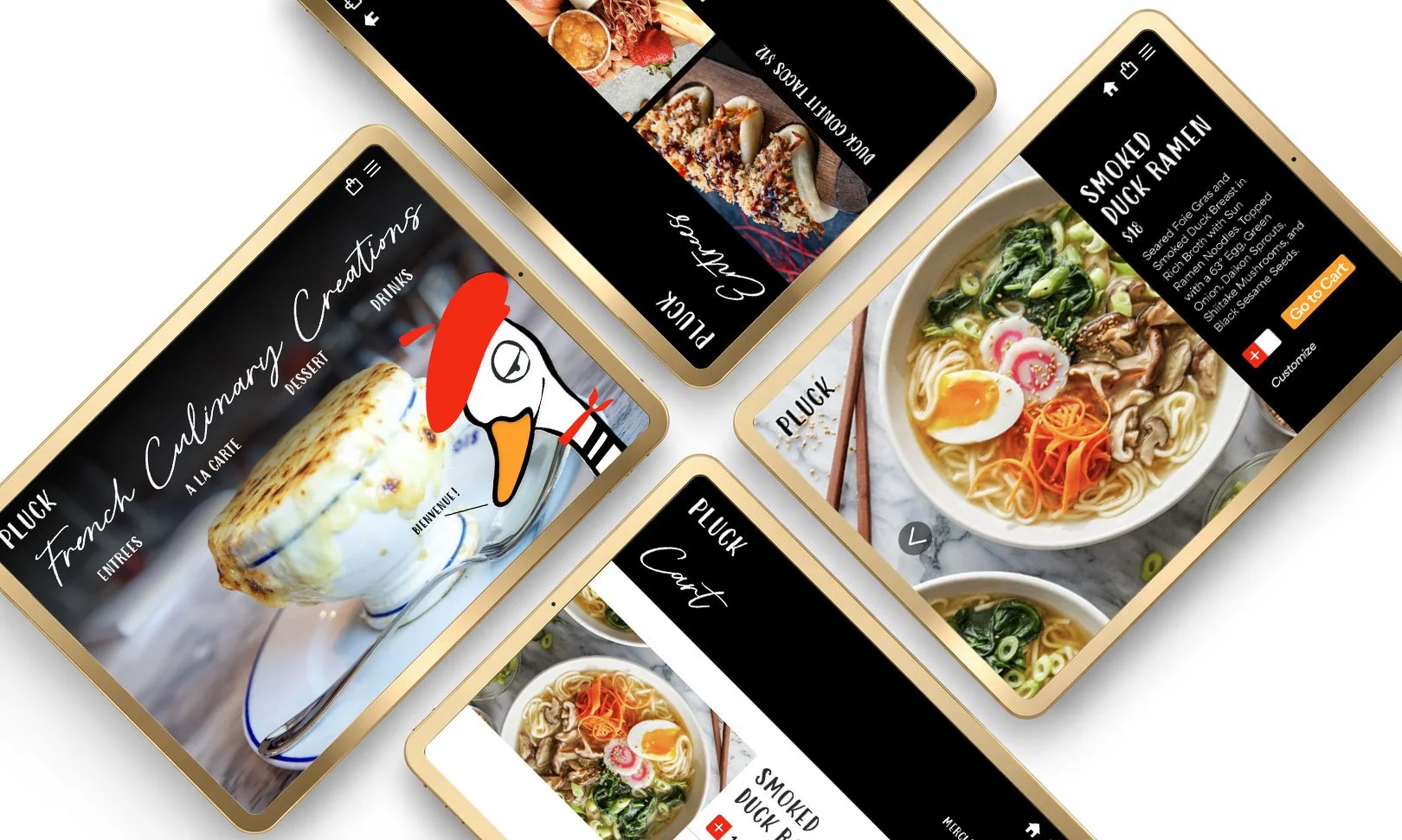
PLUCK is a branding and integrated campaign concept built around the idea of elevating the food truck experience through refined culinary positioning and strong visual identity. I wanted to create a brand that felt intentional, design-forward, and culturally relevant while still feeling approachable and rooted in everyday city life. The project combines branding, storytelling, and digital ordering to show how a mobile food concept can feel more curated than casual.
The Big Idea
PLUCK reframes the food truck model through refined French culinary craft and confident, design-forward branding. The result is a street food experience that feels intentional, elevated, and closer to a curated bistro than a typical roadside stop.
Research + Audience
My research focused on both culinary craft and the evolving role of food trucks in urban culture. Sources like The Flavor Bible, research on food trucks as curated cultural experiences, and Dominique Crenn’s approach to modern French cuisine helped shape PLUCK as more than a mobile vendor. These references reinforced the idea that French technique can feel expressive, contemporary, and approachable in a street food format.
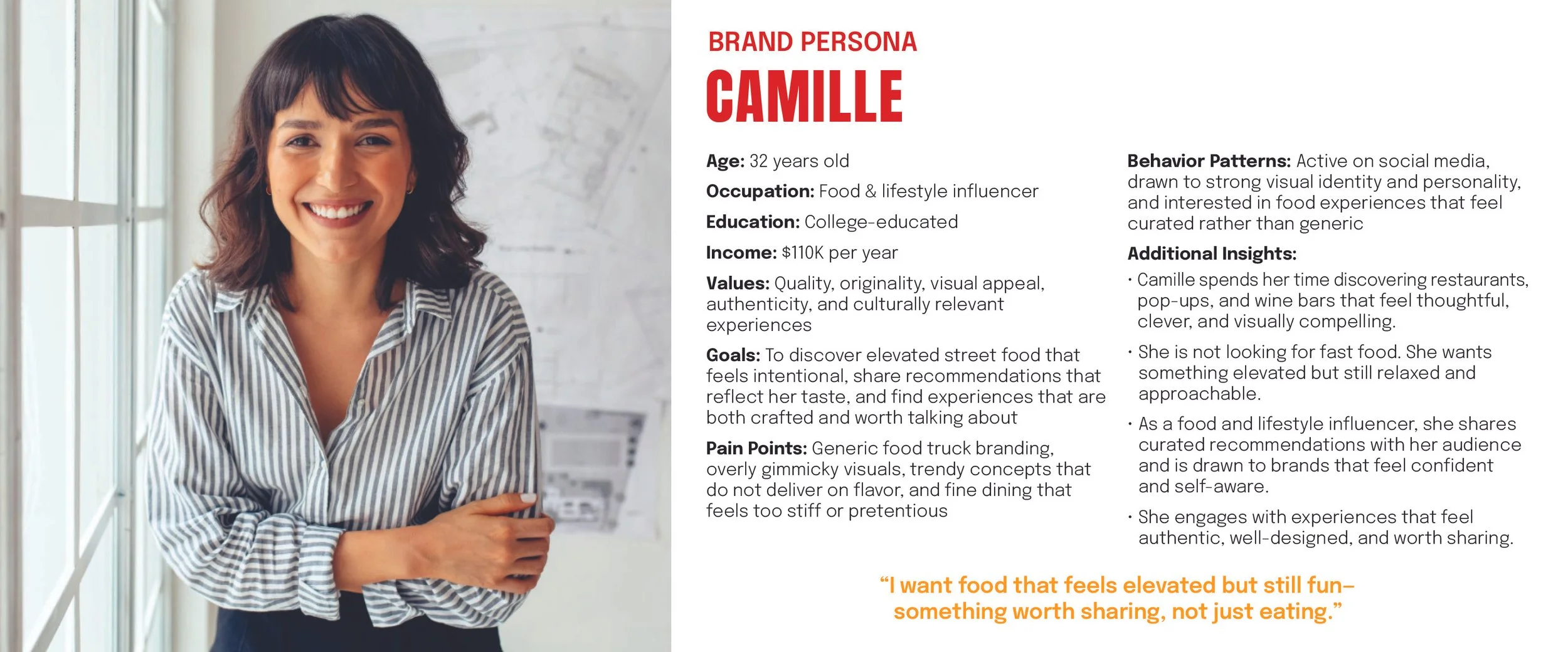
Audience research pointed toward people who are drawn to elevated food experiences that feel intentional, visually compelling, and worth sharing. Interview and persona work helped clarify that audience as design-aware city consumers who value quality and creativity, but do not want the stiffness of traditional fine dining. That insight shaped PLUCK as a brand for people who want something crafted, confident, and culturally relevant.
The Solution
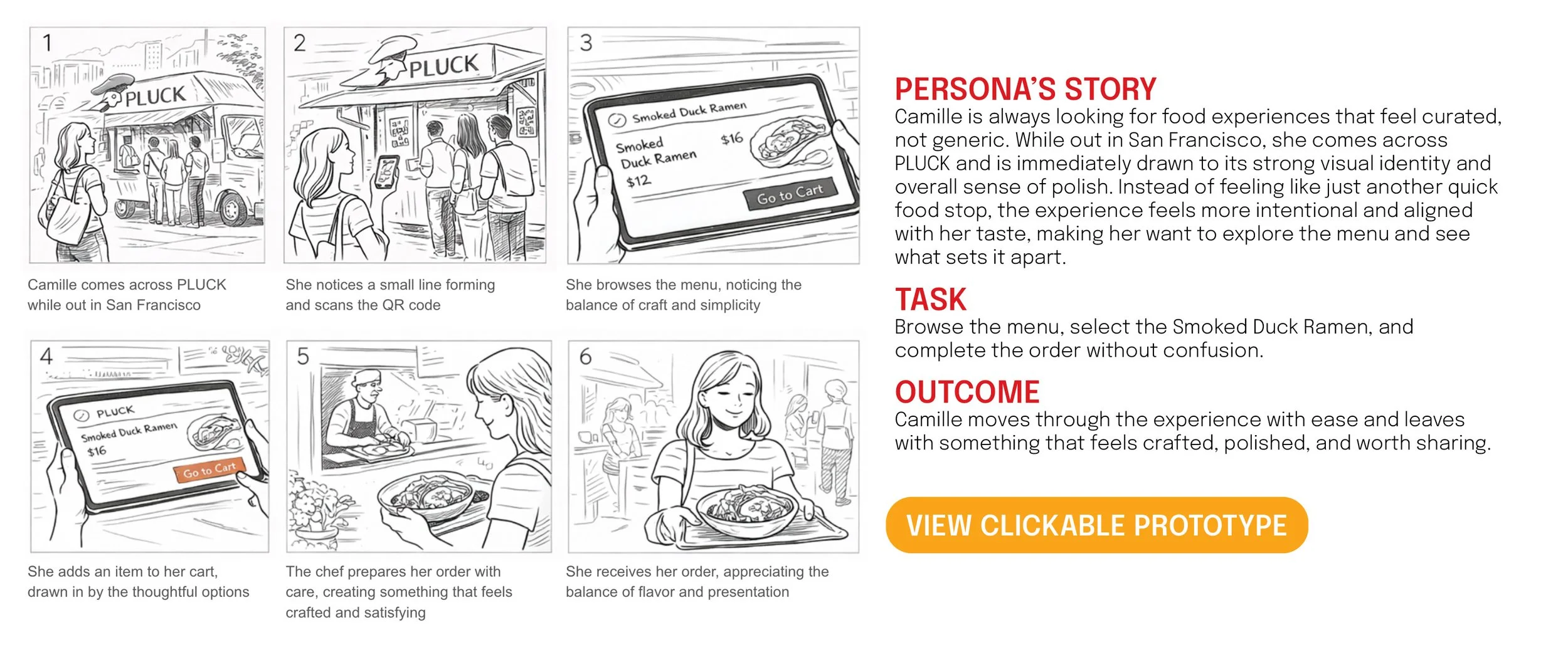
The solution was a brand-driven digital ordering experience that makes PLUCK feel polished, intuitive, and distinct from a typical food truck interaction. I wanted the interface to carry the same sense of craft as the brand itself, helping users browse the menu, select an item, and move through the cart with clarity and ease. Instead of treating ordering as purely functional, the goal was to make the experience feel intentional from the first screen to checkout.
Design Process
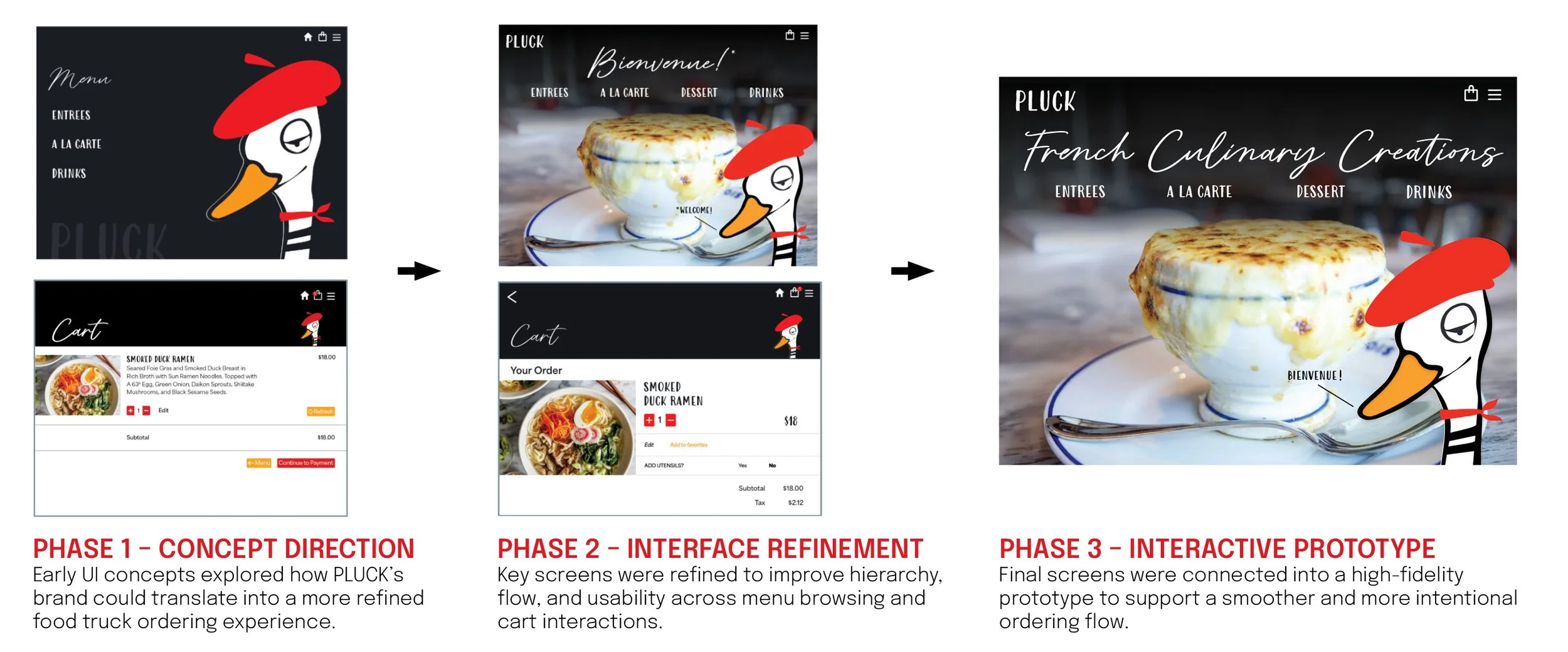
The design process began with early concept exploration, testing how PLUCK’s brand identity could translate into a digital ordering experience. I explored different directions for the home/menu and cart experience, then refined the strongest screens to improve hierarchy, flow, and usability. From there, the final screens were connected into a more cohesive interactive prototype.
Testing + Feedback
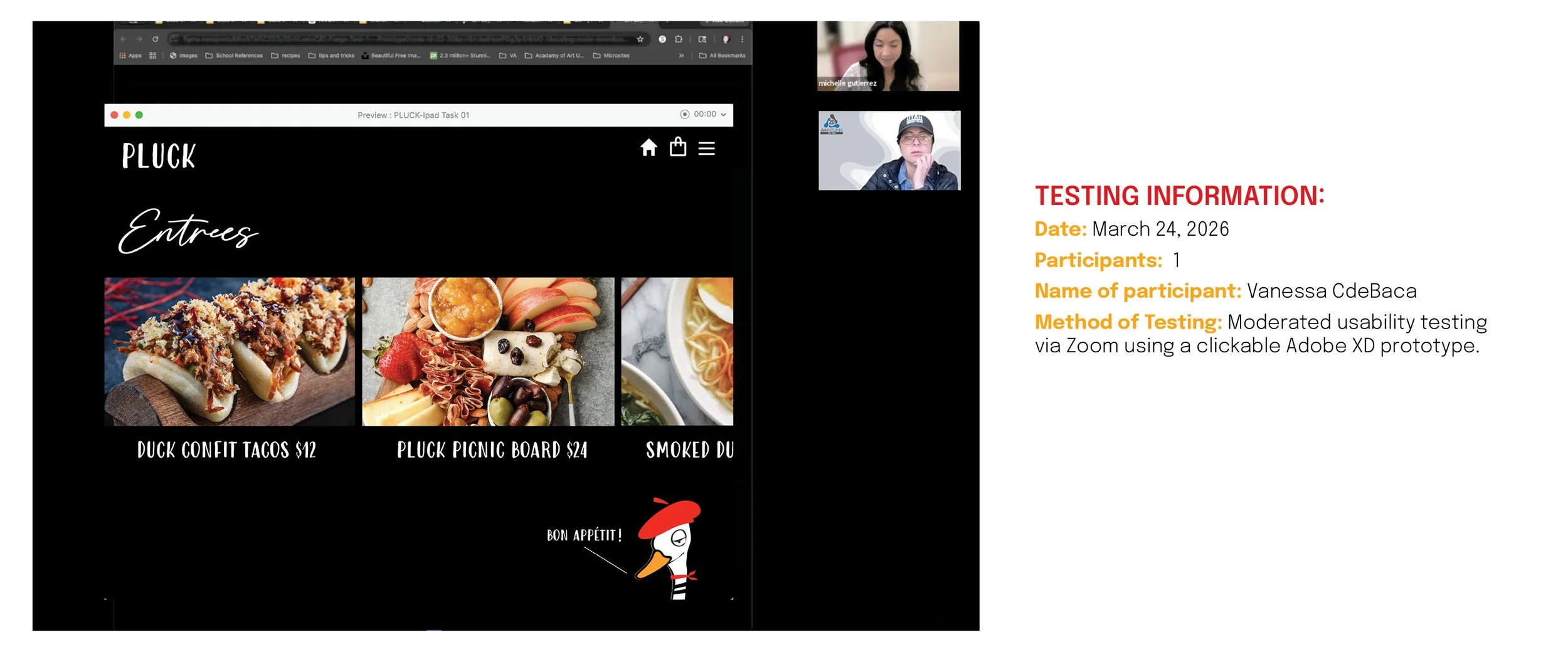
To evaluate the ordering flow, I ran usability testing over Zoom using a clickable XD prototype. The test focused on how clearly users could move through the menu, select an item, and navigate the cart. Overall, the feedback helped identify small but important opportunities to make the experience feel more intuitive.
The main refinements included changing “Go to Cart” to “Add to Cart,” making quantity defaults feel more natural, improving visibility for the “Customize” button, and clarifying horizontal navigation cues. These findings helped strengthen both usability and overall flow without losing the brand-driven feel of the interface.
Final Deliverables
The final deliverables include a high-fidelity interactive prototype, a second design component in motion, and supporting brand materials that extend PLUCK beyond the interface itself. The prototype focuses on a refined ordering flow, while the motion piece shows how the brand can translate into social and promotional content with the same personality, polish, and visual confidence. Together, the deliverables show how one concept can live across branding, UI, and motion while still feeling like part of the same system.
Conclusion
This project taught me how important it is to align brand, interface, and experience into one cohesive system. One of the biggest takeaways was learning how strong visual identity and thoughtful UX decisions can work together to make something feel both elevated and accessible. Testing also reinforced how much small interaction details and hierarchy choices affect whether an experience feels intentional.